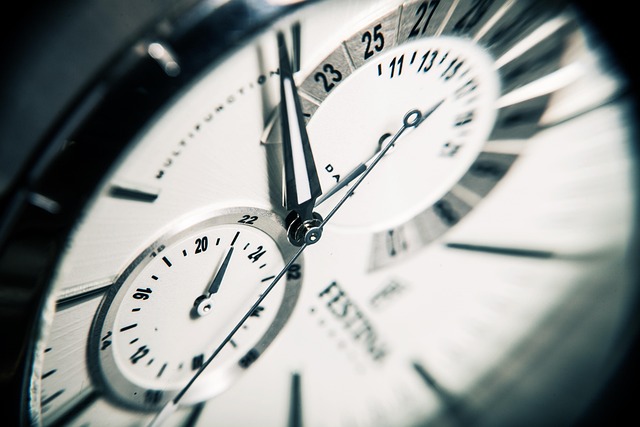
Stuck in time
The other day, I came across either a social media post or a Reddit story. I can’t really remember it all that well, as my brain has reached its maximum capacity for how much information or input it can hold, and it has been that way for quite a while now. Lol. Anyhow, what stood out to me was the number of people who reacted to the post and the fact that they came from different generations, including Gen Z. The post went something like this: “I can’t lie, but ever since COVID, the world doesn’t feel the same. No matter how hard we try to convince ourselves that things feel fine and pretend that something didn’t break or even get stuck in time, something still feels a bit odd or off.”
Many 18-year-olds had the same reply: “I was 12 back then, and I still feel 12.” As if time hasn’t really moved forward at all. Not in the physical sense, but in how we feel on the inside. Then the 23-year-olds had almost the same response. “Me too. I feel stuck in that same period. I still feel like that 16-year-old. It doesn’t feel like anything is all that real anymore. Something feels off, and I still feel like that same teenager.” Then the 30-somethings expressed the exact same sentiment.
I couldn’t see this as a coincidence, so it’s definitely worth mentioning. How could so many people feel the same way? It’s as if the world is moving forward, but somehow, we’re all a little bit out of sync. Something feels almost misaligned, as if we’re still stuck in that period right before COVID. Maybe it’s a trauma response, or maybe there’s something more to it. Who knows? But we can try to speculate anyway.
How we measure time
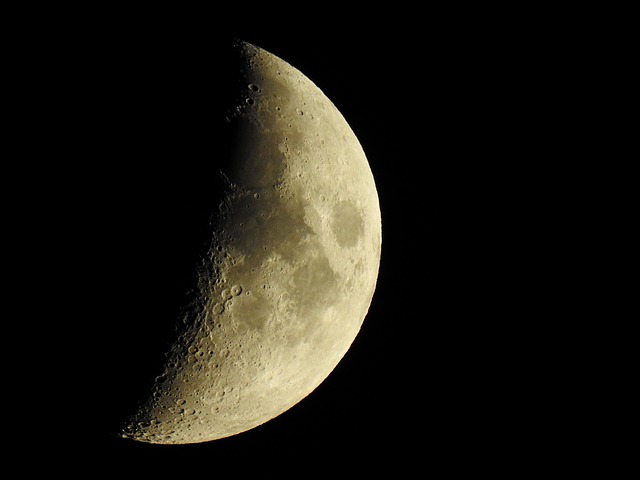
Before the Roman calendar became the 12-month system we use today, time was usually measured by the cycles of the Moon. A lunar cycle lasts about 29.5 days, giving us 13 moons in a solar year. Many ancient cultures lived by these natural rhythms, observing the Moon to understand the passing of time and how the seasons change.
The words month and moon share the same linguistic root in Old English, monath. The idea of a 13-month calendar reflects a more cyclical way of experiencing time, rooted in nature rather than the structure of our modern calendar. Historically, there wasn’t one universal 13-moon calendar that Rome replaced, although Ethiopia and the Coptic Christians use a 13-month calendar to this day. The idea of a 13-month calendar was even proposed in the United States in the 1920s. Known as the International Fixed Calendar, it would have had 13 months of 28 days each, with an extra day at the end of the year that did not belong to any day of the week. Although the weeks would still have had seven days, this extra day would have interrupted the continuous seven-day cycle, raising objections from religious groups. The proposal was never adopted.
In Ethiopia, it’s 2019 now, and when COVID was declared a pandemic, it was 2012 there. So maybe the Mayans really were on to something when it came to the end of the world or the end of a great cycle. The Romans had a 10-month calendar before King Numa Pompilius added January and February around the 7th century BCE, after Romulus’s original calendar.
Ancient Egypt had a 12-month calendar, each consisting of 30 days, with 5 extra days left, which they called epagomenal days. They were dedicated to the births of five deities: Osiris, Horus the Elder, Set, Isis, and Nephthys. So, now that we know time is more of a human construct, although there are obviously cycles worth noting in nature, I wonder how we would feel if we considered every day one continuous day? Just food for thought.

The battle of the super senses | Overcoming self-doubt
It’s almost the end of 2026 now, and if there was one concept brought into question in 2020, it was personal sovereignty. This was partially due to the pressure everyone felt around vaccination mandates, which differed from previously administered vaccinations, etc. This was a hot topic back then and for several years, since so many professionals had to resign or were fired, including doctors, people who worked in law enforcement, teachers, etc.
Although, as with any concept, it can be hijacked, misused, or even weaponized, I want to briefly expand on personal sovereignty, as these are concepts that will take us decades to spiritually understand and implement in our lives. I’ve talked about personal sovereignty in my book How to Get on the Good Side of Life, which you can find on Amazon and in the book section of this blog. And yes, I said spiritually, because as I’ve mentioned in other posts, whether we like to admit it or not, everyone is somewhat spiritual in their own way. We all have our yeses and nos, dos and don’ts, and we all have a moral compass we abide by, whether we apply that socially or inwardly, etc.
Now, in a nutshell, personal sovereignty equates to you being the only governor of your own decision-making process. It’s about you implementing the archetype of the King or Queen in your own life, with the decisions you make resting with you and only you. This is not about having a know-it-all attitude toward life or refusing to accept advice when needed, but rather about trusting yourself to be self-governing despite social pressures or outside advice.
Side note: When we had the No Kings protests across the US and other parts of the world, I found it pretty amusing because not only could this subconsciously encourage people to deny their own power and decision-making, but it could also create a divide between the self and the ego, potentially cutting us off from our own internal truth. In order to be truly sovereign in our lives, we have to be deeply connected to ourselves and what we truly want, rather than be swayed by what we should do or what we should want in any given moment. Otherwise, we are still looking to external figures or authorities and not consciously operating from our own sense of sovereignty. But in order to do this, it is imperative that we learn to center ourselves, deeply connect with who we are, and recognize that self-knowing is indispensable.
If we are not able to accept or get in touch with our own subjective perspective, which doesn’t necessarily erase an objective one, as we can hold space for both, we cannot create stability within our own lives and can easily get stuck in the chaos, especially when it comes to our own internal compass. This can lead to emotional instability, even psychosis or other mental breakdowns. Imagine a game of chess with no king or queen. You’d be running around in circles to do what, exactly?
The world really is weird sometimes, and the road to hell really is paved with the best intentions. Lol.
Acceptance and trusting our own boundaries | Stuck in time
Our ability to trust ourselves and create and even maintain healthy boundaries is often shaped by our earliest relationships. The ways we learned to navigate connection, safety, and emotional needs during childhood can follow us into adulthood, shaping the way we relate to others and how easily we lose touch with ourselves.
If primary caregivers were inconsistent, we tend to develop more anxious attachment patterns and learn to abandon our own needs to regulate our caregivers’ emotions and tend to their needs. This can carry into adulthood, making us more susceptible to codependent patterns in romantic, platonic, and even work relationships. Others may have had caregivers who were physically present but emotionally unavailable. As adults, they may become highly independent and successful while struggling with emotional intimacy or empathy due to a lack of emotional connection in childhood. Then some experienced or witnessed significant abuse and neglect, growing up with deep-seated fear. As adults, they may strongly crave connection to survive while simultaneously fearing the people they become close to, leaving them caught between the need for safety and the fear of being hurt.
Without clear boundaries or a clear sense of direction, purpose, and inner knowing, we can become susceptible to external manipulation. We can easily put others’ perspective at the center of our being and get thrown around like a paper bag in the wind. This doesn’t do anyone any justice, so for the sake of our own well-being, we have to learn to be comfortable with the validity of our own subjective experience. For instance, imagine feeling exhausted on a Monday and spiraling a bit about how things are going in your life, only for a friend to tell you that you shouldn’t feel that way because people are starving and going to war every day. We can hold space for both subjective and objective perspectives because reality itself is chaotic, with so many different perspectives and things happening all at once, and if we are around a bunch of other people with other perspectives and ideas, we can easily get sucked into their own. We can lose ourselves and even, in some extreme cases, become victims of gaslighting, manipulation, and even abuse by those deliberately wanting to pull us into their game, dominate us, and knock us off the center of our sovereignty, especially if we don’t see our own subjective experience as a valid compass, a source of wisdom and meaning, and for directing our lives and governing our lives.
This happens often within cults or anywhere, really, where, unfortunately, people who lack a sense of personal sovereignty make their leader and their perspective the center of their own. This can cause deep disconnection as it calls everything into question, creates constant self-doubt, self-gaslighting, and constant rumination on what we should do, how we should feel instead, what we see or don’t see, etc. Perhaps this is also why so many of us feel stuck in time, as if we haven’t quite moved forward since 2020. Maybe there are lessons we are still learning to overcome, cycles we are still trying to break, whether on a personal or collective level, or perhaps both. Sometimes, we keep revisiting the same experiences until we understand something we couldn’t quite grasp before. And perhaps the feeling that something is still unresolved, that something is somehow off, is an indication that there are things we have yet to work through, both within ourselves and as a collective. But that’s only a limited perspective from a tired mind. There may be more to this.


